
 407-416-2704
 4.9-star rating on over 750 Google reviews
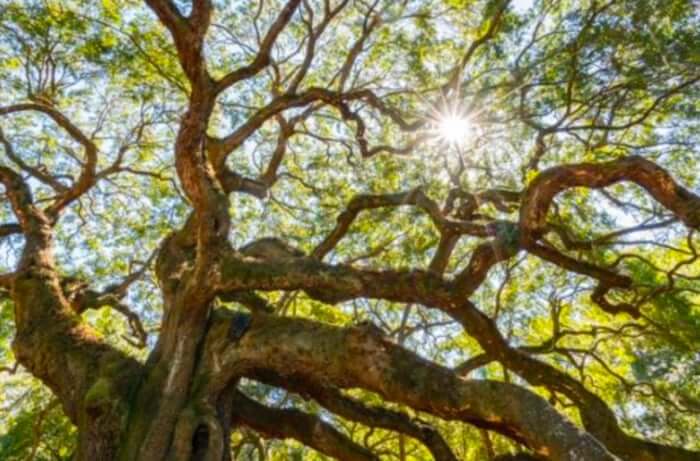
You’ll find them in every Orlando neighborhood built between 1975 and 1995. The streets are lined with towering laurel oaks, the driveways shaded, and the canopy arching over rooftops. They look majestic. They look permanent. They appear to be the sort of tree that would endure longer than the houses it protects.
Most of them won’t.
Here is the uncomfortable fact about Central Florida’s most adored canopy tree. The laurel oak, Quercus laurifolia for you botanists out there, may seem to homeowners to be a long-lived monarch, but it is not. These are fast-growing, weak-wooded, structurally compromised trees that builders planted by the thousands during Orlando’s suburban boom, and those trees are now reaching the end of their reasonable life expectancy all at once.
Imagine an entire generation of trees, all planted within twenty years of each other, all experiencing structural failure at roughly the same time. That is where Central Florida currently stands. And the effects are emerging in roof claims, driveway crushings, and emergency removals across Orange, Seminole, and Volusia counties.
Why Builders Loved Them, and Why That Was a Mistake
A laurel oak problem begins with understanding why your subdivision is full of them in the first place. When developers carved Orlando’s suburbs out of protected pine flatwoods and palmetto scrub during the 1970s, 80s, and 90s, they needed instant landscape. Buyers wanted shade. Sales offices wanted that established-neighborhood vibe.
Laurel oaks delivered. They grow rapidly, and I mean astonishingly rapidly, easily two to three feet annually in prime conditions. A laurel oak produces serious canopy within a decade of planting. In twenty years it resembles a one-hundred-year-old tree. These were cheap, readily available from nurseries, and adapted to the disturbed, sandy, post-construction soils that characterized most new subdivisions in Florida.
What the developers either didn’t recognize or simply ignored was the trade-off. Quickly grown trees usually mean weak wood. Those species that grow slowly, such as live oaks, build dense and tough wood cells. The species that race fastest to occupy canopy space build something more akin to balsa with bark.
Laurel oaks belong squarely in the second category. They are soft, prone to rot from the inside, and structurally inferior in almost every way you can measure durability compared to oak species that were designed for longevity.
The Lifespan Reality
Live oaks have been known to reach several centuries in age. There are specimens in Florida recorded as over five hundred years old. Laurel oaks? In practical terms, their lifespan is 50 to 70 years in great conditions, and city and suburban environments will shorten that.
Calculate for your area. A laurel oak planted in 1980 is now in its mid-forties. One planted in 1985 is forty. The trees that were saplings when your house was new are now mature specimens nearing the back end of their expected lifespan, and that’s if they had a chance to begin with, which most didn’t, given that the vast majority were installed into compacted construction soil with crushed roots.
In fact, the marvel is not that so many laurel oaks are failing these days. The marvel is that more of them haven’t failed already.
How Laurel Oaks Actually Fail
Laurel oaks have a very predictable failure pattern, and once you know what to look for, you will see it everywhere. They break in four basic ways, sometimes separately, often in combination.
The first is sudden branch drop syndrome. This is exactly what it sounds like. On a windless day, when there is no squally weather at all, a hefty branch, sometimes the size of the whole trunk of an average-sized tree, snaps off. No storm. No warning. Just a giant crashing sound and a six-inch limb resting across your driveway. It is found in multiple species, but laurel oaks are especially susceptible, and research from various university extensions indicates that it is associated with internal moisture imbalances on hot days after heavy rainfall events.
The second is co-dominant stem failure. Most laurel oaks fork into two or three main trunks at relatively low heights, and the place where they fork often has what arborists call included bark, bark that is pinched between the stems instead of properly fused wood. You have a junction that looks fine from the ground for decades, until one summer it just splits, and most of the tree breaks off.
The third is internal rot leading to trunk failure. Laurel oaks are very prone to many types of fungal pathogens, and once decay has begun inside the trunk, it often progresses significantly faster than most homeowners expect. The exterior looks healthy. Full canopy, normal bark, no clear signs of trouble. Meanwhile, the interior is rotting from the inside out, and what looks like a solid trunk is actually a thin shell around a hollow column.
The fourth is root failure. Shallow root systems, combined with decades of injuries from construction when homes are expanded or pools are dug, leave many laurel oaks with too little root mass to support their massive crowns. Add saturated soil from a tropical system, and the entire tree simply falls over.
Actually Observable Warning Signs
Some laurel oak problems are subtle and need to be evaluated by a professional. Others are fairly obvious if you know where to look.
Start with mushrooms. Any fruiting body, and there are many types, seen on or around the trunk of a laurel oak should raise a considerable alarm. Bracket fungi, conks, shelf mushrooms, anything growing out of the bark or at the bottom of the tree. These aren’t passing visitors. They are the reproductive organs of fungi that have been quietly burrowing into the insides of trees, typically for years of hidden digestion before a fungus sprouts.
Look at the bark. Healthy laurel oak bark is somewhat even in texture and color up and down the trunk. Patches of different texture, areas of bark that appear indented or where an obvious bulge or depression exists in the trunk, vertical cracks running up the trunk, all of these deserve a second look.
Look where the major limbs attach to the trunk. Open U-shaped angles are stronger than tight V-shaped ones between stems. If you can see bark compressed between two stems at a junction, that is included bark, and it is a structural defect that grows worse over time.
Be on the lookout for dead branches throughout the canopy. In any tree, a little deadwood is natural. But a considerable amount of deadwood, particularly if it is clustered in one part of the canopy or shows on previously healthy branches, indicates the tree is unable to sustain its entire weight.
Check the base. Mushroom-like growths at the soil line are of significant concern because they indicate ganoderma or other root-zone decay organisms. Indicators of root plate movement include soil being pushed up on one side, crescent-shaped cracks around the base of the trunk, or roots that appear to have heaved out of their normal position.
When to Save and When to Remove
Every homeowner with a troubled laurel oak reaches this question eventually. Can it be saved? Should it be saved? What are your honest options?
Some trees with minor structural problems can be helped, if the issues are not too severe, by providing pruning and cabling as needed. Reducing the leverage on overextended limbs is called end-weight reduction. Targeting co-dominant stems while they are still relatively small can prevent future failure. Cabling systems can support limbs that would otherwise become a liability.
However, as far as honest assessment goes, many laurel oaks reach the point where intervention is simply pushing back what was always inevitable. A tree with severe internal decay cannot be cured. You cannot re-anchor a tree with an unrecoverable root plate. A tree with multiple structural defects, that also happens to have species-specific weak wood, is frankly a liability and worth removing sooner rather than later.
Let’s be honest. The hardest conversation in tree care isn’t telling a homeowner that their tree needs to come down. It’s helping them understand that paying now to remove it is relatively cheap in dollars, in stress, and in property destruction, while the cost of dealing with that same tree after it has failed is far greater.
The Replacement Question
That is the good news to be had out of this. You aren’t condemning your yard to decades of no shade by removing a problem laurel oak. There are species that perform better than laurel oaks in Central Florida, and they grow fast, just not at the frenzied rate.
The first of these is the live oak. It is slower growing but considerably stronger, longer-lived, and more wind-resistant. If you plant a live oak today, your grandchildren will enjoy it.
Southern magnolia handles the wind nicely, fits the bill for screening throughout all seasons, and exhibits none of the structural problems that plague laurel oaks.
Despite being deciduous, bald cypress grows rapidly in moist sites and develops a stately form with astonishing hurricane resistance.
Sycamores and southern red oaks can occupy certain landscape niches without inheriting any of the laurel oak’s baggage, and certain palms can do the same.
Resources on species selection for Central Florida properties are available from the University of Florida Extension, and any certified arborist can review solutions tailored to your site conditions.
Why You Shouldn’t Wait
Each year you delay assessing a mature laurel oak creates an additional year of risk. The trees aren’t getting healthier. The wood isn’t getting stronger. The fungal organisms inside aren’t slowing down. And Florida’s hurricane seasons aren’t getting any milder.
If you live in an Orlando-area neighborhood built between 1975 and 2000, and you almost certainly do if you have laurel oaks on your property, getting a professional assessment isn’t paranoid. It’s prudent. A certified arborist can walk your property, evaluate individual trees for health and soundness, and provide you with a realistic assessment of what you’re up against.
Some of those trees may be all right for years to come. Others may require pruning and support. Some may need to come down. Without an honest assessment, you are guessing, and when you guess wrong, the consequences land squarely on your roof.
Central Florida’s laurel oaks are not going to age gracefully. Sown in a hurry, grown in a hurry, and failing in a hurry. The homeowners that get ahead of that timeline save their property. The ones who don’t will have to handle the fallout the hard way.
If you need professional tree removal for yourself or a neighbor in the Orlando area, remember Tree Work Now. With years of service under their belts, their expert crews provide safe, reliable tree care services for Central Florida homeowners. Reputed for their rigorous crew selection process and for treating your property like it is their own. One of their specialties is assessing laurel oaks. Learn more at treeworknow.com.
 Please call