
 407-416-2704
 4.9-star rating on over 750 Google reviews
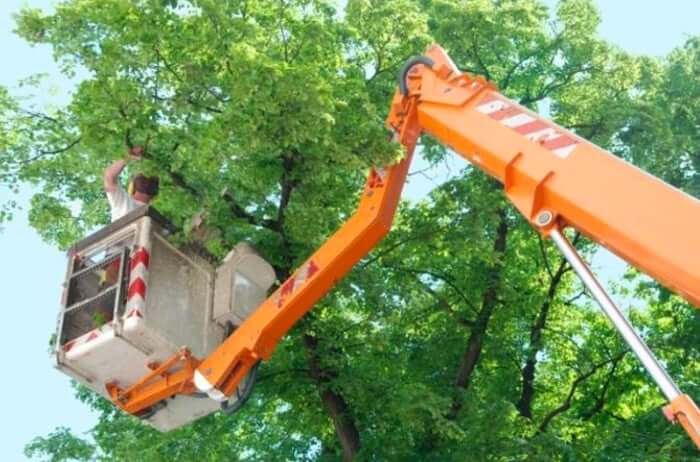
Each June, when hurricane season officially begins, Orlando homeowners start thinking about storm pruning and look nervously at their trees. That big oak near the house. The pine that’s gotten too tall. The branches hanging over the roof.
Smart thinking. But here’s what most people don’t realize. The time to prepare trees for storms isn’t when the forecast shows a tropical system heading toward Florida. It’s months before, when strategic pruning can make a difference.
Storm pruning isn’t about cutting trees back randomly or removing as much as possible. It’s about understanding how wind moves through a tree canopy and making calculated decisions that reduce risk without destroying the tree’s health or structure.
How Wind Actually Affects Trees
Trees don’t just blow over because they’re tall or old. The physics of wind damage is more complicated than that.
When wind hits a tree, it creates pressure on the canopy. Dense, thick canopies act like sails, catching wind and transferring that force down through the trunk and into the root system. If the force exceeds what the roots can hold or what the trunk can flex to accommodate, something gives. Either branches break, the trunk snaps, or the whole tree uproots.
The goal of storm pruning is to reduce that sail effect. Not by butchering the tree, but by strategically thinning the canopy so wind can pass through rather than pushing against a solid wall of foliage.
Think of it like the difference between holding a piece of plywood in a windstorm versus holding a ladder. The plywood catches everything and tries to rip out of your hands. The ladder lets wind pass through the rungs. Trees can be pruned to work more like that ladder.
What Storm Pruning Actually Involves
Professional storm pruning focuses on a few key techniques that work together to reduce wind resistance while maintaining tree health.
Crown thinning removes selective branches throughout the canopy to reduce density. This isn’t about taking out every other branch or creating visible gaps. It’s about strategic removal that opens up the interior, allowing wind to flow through. Done properly, the tree should still look full and natural, just less dense.
Deadwood removal takes out branches that are already dead or dying. These are the most likely to break during storms and become projectiles. They’re also not contributing anything to the tree’s health, so removing them is purely beneficial. Dead branches are essentially weak points waiting to fail.
End weight reduction addresses branches that have gotten too long and heavy at their tips. These act like levers during wind events, putting enormous stress on the attachment point. Shortening them reduces that leverage without removing the entire branch.
Raising the canopy lifts lower branches to reduce the overall profile that catches wind at ground level. This is more relevant for some species than others, but it can make a significant difference in how wind moves around and through the tree.
The critical thing is that storm pruning should never remove more than 25% of a tree’s canopy in a single session. Trees need their leaves to photosynthesize and stay healthy. Over pruning weakens them, making them more vulnerable to stress, disease, and ironically, storm damage.
Species That Need Different Approaches
Not all Orlando trees respond the same way to wind or to pruning.
Live oaks, those massive spreading trees that define Central Florida landscapes, are actually pretty wind resistant by nature. Their dense, hard wood and spreading structure handles storms relatively well. But they can still benefit from selective thinning, especially when branches have grown too long or when deadwood has accumulated. The key with live oaks is conservative pruning. They’re susceptible to oak wilt, so pruning should happen in winter months, and cuts should be minimal.
Pines are a different story. They grow tall and fast, with relatively shallow root systems for their height. In storms, pines are among the first to fail. Storm pruning for pines focuses on removing competing leaders (multiple trunks at the top), thinning out dense branch clusters, and managing overall height when practical. But honestly, pines in vulnerable locations near structures are sometimes candidates for removal rather than just pruning.
Palms don’t get pruned in the traditional sense since they don’t have branches. But removing dead fronds before storm season is essential. Those brown, hanging fronds catch wind and can rip loose, either damaging the palm itself or becoming flying debris. Fresh green fronds are strong and flexible, designed to handle wind. Dead ones are just hazards waiting to happen.
Laurel oaks are common in older Orlando neighborhoods, and they’re notorious for storm damage. They grow fast, the wood is relatively weak, and branches often develop poor attachment angles. Storm pruning for laurel oaks needs to be aggressive about removing weak limbs and reducing end weight. Even with good pruning, laurel oaks near structures are risky.
Crape myrtles, smaller ornamental trees, rarely cause major damage in storms but can break or split if they haven’t been pruned correctly over the years. Proper structural pruning when they’re young prevents multiple trunks and weak crotches that split under stress.
Timing Matters More Than Most People Think
Here’s a reality that catches Orlando homeowners off guard. You can’t just prune trees any time and expect good results.
Different species have different optimal pruning windows, and some of those windows don’t align with when people start thinking about storm prep.
Live oaks should only be pruned during winter months, roughly November through March, to minimize oak wilt risk. That means storm pruning for live oaks needs to happen well before hurricane season even starts. Waiting until May or June and then calling for oak pruning is either going to get refused by knowledgeable companies or done by someone who doesn’t understand the disease risk.
Most other species can handle pruning into early spring, but even then, earlier is better. Trees pruned in January or February have months to seal wounds and recover before facing summer storms. Trees pruned in May are dealing with fresh cuts right as severe weather becomes likely.
The exception is emergency situations. If a tree has major damage or obvious hazards, waiting for the “right” season isn’t smart. But for proactive storm prep, planning ahead and pruning during appropriate seasonal windows produces much better results.
What Homeowners Can (and Can’t) Do Themselves
Small scale pruning is manageable for homeowners with the right tools and knowledge. Removing small dead branches from the ground or with a ladder can be done safely if someone knows proper cutting technique and doesn’t overreach.
But storm pruning that reduces wind resistance requires working throughout the canopy, often high up, with proper climbing equipment or lifts. It requires understanding tree structure well enough to know which branches to remove without destabilizing the tree or creating future problems.
Most importantly, it requires understanding how much is too much. Homeowners trying to do their own storm prep often over prune, thinking more cutting equals more safety. Over pruning stresses trees and can make them more vulnerable.
Chainsaw work, especially overhead or on a ladder, is where things get dangerous fast. Most tree related injuries and deaths happen to homeowners attempting their own work. Professional tree crews have training, proper equipment, insurance, and experience that fundamentally changes the risk equation.
The honest assessment is that meaningful storm pruning for mature trees isn’t a DIY project for most people. Small maintenance work, sure. Strategic canopy thinning on a 40-foot oak? That’s professional territory.
Signs a Tree Needs Storm Pruning Now
Some warning signs should trigger immediate attention rather than waiting for the next convenient pruning window.
Dead branches throughout the canopy mean the tree is shedding limbs and those dead sections will absolutely come down in the next significant wind event. They might come down through a roof.
Branches overhanging structures create obvious risk. Even healthy branches can break under wind stress or heavy rain, and when they’re directly over a house or garage, the consequences are predictable.
Cracks in major limbs or the trunk indicate structural failure that’s already in progress. These trees are on borrowed time, and storm conditions will likely finish what’s already started.
Leaning trees that weren’t leaning before, or trees with exposed roots on one side, are showing signs of root failure. Storm pruning isn’t going to fix that. These need assessment for removal.
Dense canopies that barely move in normal wind aren’t flexing the way healthy trees should. They’re catching wind like a sail rather than bending and allowing flow through. These are prime candidates for thinning.
Multiple trunks with weak attachments create structural vulnerabilities that storms exploit. Crotches with bark included between trunks are especially prone to splitting.
The Mistakes That Make Things Worse
Lion tailing, where all the interior branches are removed leaving only foliage at the ends, is probably the most common storm pruning mistake. It looks neat and tidy, but it concentrates all the weight at the branch tips, creating exactly the leverage problem storm pruning is supposed to prevent. It also removes the branches that help stabilize the main limbs.
Topping, cutting straight across the top of a tree to reduce height, destroys the tree’s natural structure and creates multiple weak sprouts that are more likely to fail than the original branches. Topped trees are more dangerous after a few years, not safer.
Over thinning removes so much canopy that the tree can’t photosynthesize effectively. Stressed trees are more susceptible to disease, pest problems, and yes, storm damage. A tree struggling to survive isn’t going to hold up better in a hurricane.
Flush cuts, removing branches right against the trunk without leaving the collar, prevent proper wound sealing and invite decay into the trunk. Each flush cut is a potential entry point for rot that can weaken the entire structure over time.
These mistakes are common enough that many Orlando trees have damage from bad pruning that’s more threatening than the original storm risk. Choosing who does the work matters as much as whether the work gets done.
The Reality About Storm Resistant Trees
No amount of pruning makes trees storm proof. Hurricane force winds will damage and destroy trees regardless of how well they’ve been maintained. The goal isn’t invincibility, it’s reducing risk during the more common severe thunderstorms, tropical storms, and lower category hurricanes that Central Florida experiences regularly.
Well pruned trees still lose branches in major storms. They can still uproot if the ground is saturated and winds are strong enough. But they’re less likely to fail catastrophically, and when they do have damage, it’s often less severe than trees that haven’t been maintained.
The combination of strategic pruning, regular maintenance, and honest assessment of which trees shouldn’t be near structures in the first place gives homeowners the best possible odds. But it’s about risk management, not risk elimination.
Planning Ahead for Next Season
Smart Orlando homeowners aren’t scrambling in May to get trees ready for June storms. They’re scheduling assessments in January, getting work done in February and March, and entering hurricane season knowing they’ve done what they can.
That means looking at the calendar now and planning. If live oaks need work, they need winter pruning. If other species need attention, early spring is the target. Waiting until storm season is already underway means either rushed work, limited availability from quality companies, or having to postpone until next year.
Regular maintenance, where trees get assessed and pruned on a routine schedule rather than emergency basis, catches problems before they become crises. It spreads cost over time instead of facing huge bills when multiple trees need urgent work. And it establishes relationships with reliable tree services before everyone else is calling them in a panic.
Trees that receive consistent attention every few years hold up better than trees that get ignored for a decade and then receive aggressive pruning all at once. The maintenance approach builds long term resilience.
When Pruning Isn’t Enough
Sometimes the honest answer is that a tree shouldn’t be where it is, regardless of how well it’s pruned.
A 60 foot pine leaning toward a house is a disaster waiting to happen. Pruning might delay it, but it’s not going to prevent eventual failure. A laurel oak with major trunk rot isn’t going to be saved by crown thinning. A tree that’s already partially uprooted isn’t going to restabilize with some branch removal.
Professional arborists should be willing to have those difficult conversations about when removal makes more sense than ongoing management. It’s not about generating removal business; it’s about honest risk assessment.
The hardest part for homeowners is often accepting that a tree they’ve loved for years has become a liability. But a tree that comes through the roof during a storm erases any sentimental value pretty quickly. Sometimes the right call is letting it go before that happens.
Making Storm Pruning Work
The trees in Orlando yards aren’t just decoration. They provide shade, increase property values, create habitat, and make the heat more bearable. They’re worth protecting and maintaining properly.
Storm pruning is part of that maintenance. Done right, at the right time, with understanding of what each species needs and what the goals are, it reduces risk without sacrificing tree health.
It requires planning ahead. It requires working with people who understand tree biology and physics, not just chainsaw operation. It requires regular attention rather than panic mode every June.
But for homeowners willing to approach it correctly, storm pruning makes Orlando yards safer without turning them into treeless wastelands. The trees stay, they stay healthy, and they’re more likely to weather whatever the next storm season brings.
That’s the goal. Not invincible trees, but resilient ones. Not bare yards, but maintained landscapes. Not guarantees, but better odds.
Orlando area homeowners looking for professional tree services can reach out to Tree Work Now, whose experienced crews serve Central Florida with reliable tree care. Known for their careful crew selection process and commitment to treating every property with respect, they’re available at treeworknow.com.
 Please call