
 407-416-2704
 4.9-star rating on over 750 Google reviews
There’s a certain type of dread that comes from standing in your back yard, looking up at an oak tree you’ve likely walked past a thousand times and realizing something isn’t right. Perhaps it is a lean that did not exist last season. Perhaps it is a crack in the trunk after a terrible storm. Maybe the canopy simply appears thin and exhausted in a way that’s difficult to express. Regardless, oak tree removal is in your future.
It’s tough to let go of oak trees. Central Florida is the home of the mature live oak that makes a property, in those decades it took to spread into what they are. But there are circumstances where removal is the only responsible decision, and understanding how to identify those circumstances, and what to do next, can save a homeowner painful stress and lots of money.
Why Most People Don’t Realize How Complicated Oak Tree Removal Is
If you want to take it a little farther, walk up to a mature live oak and just look at it for a minute. The canopy spans 60 to 100 feet wide. The trunk measures several feet around. The roots grow deep beneath the soil, well beyond what you can see above ground, and have been known to lift driveways, push against foundations and work their way into sewer lines over time.
And that’s what makes oaks so special. And it’s also what makes taking one truly complex work out of the mix.
Gravity in an oak canopy is not always apparent from the ground. One limb that appears manageable can weigh hundreds of pounds once cut free. The tap root, which spreads rather shallow and wide, also needs to be accounted for in the removal so that surrounding soil isn’t destabilized. And the size of a mature tree makes it easy to be dangerously wrong: If something goes wrong during removal, you’ve got a serious situation.
Not to sound the alarm, however. It’s simply worth knowing why oak tree removal is work that will go better with careful planning and experienced hands.
When Exactly Does an Oak Need to Come Down?
This is the portion homeowners struggle with, and quite frankly, that reluctance is justifiable. Oaks are slow growers. There are no replacing a 60- year-old tree. The impulse to protect one is generally worth heeding.
But there are some circumstances that don’t lend much to optimism.
One of which is storm damage significant. A tree with a split trunk, a serious lean toward a building or giant parts of the canopy torn away is compromised well beyond what any amount of pruning or bracing can remedy. This is not a problem to check on over time: A leaning oak jutting out over your roof.
Disease and internal decay are more challenging because they aren’t always visible. Oak wilt, a fungal disease documented in Florida, can spread rapidly through a tree. Early warning signs include premature browning and dropping of leaves, discoloration beneath the bark and a general state of rapid decline. Mushrooms or fungi at the bottom of a trunk, or wood that sounds hollow when tapped, usually indicates internal decay that has been taking root—quietly and for longer than most realize.
Root failure is another one. If there is cracking or heaving in the soil around the base of a tree, or if a tree has shifted visibly after heavy rain, the root system may no longer be performing its job reliably. A tree that cannot anchor itself is a danger no matter how healthy the canopy appears.
And sometimes the tree is fine, but where it is has become a problem. An oak that grows too close to a house, power lines or septic system might need to be removed simply because its continued growth doesn’t jibe with the structures around it. In those situations, waiting usually makes the work more difficult and costly.
Permits: Don’t Skip This Step
Orlando and Orange County each have tree protection ordinances, which often cover oak trees. Here the tree has to be permitted and if it exceeds a certain trunk diameter this applies even before any work begins. Because some heritage trees get even more protection than that.
Before anything gets scheduled, though, it’s worth a quick inquiry with your local municipality. Any tree service worth its salt will be familiar with local regulations and take care of the permitting process as part of the job. If a contractor advises skipping the permit in order to work faster or save money, take that as a warning sign.
What the Removal Process Is Actually Like
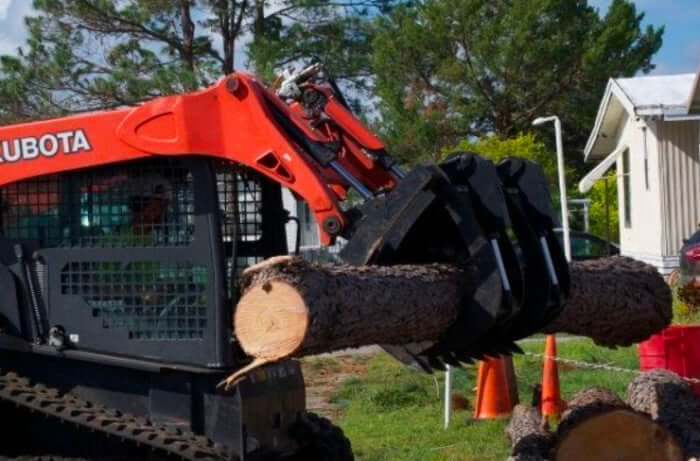
For a massive oak next to a house or other building, the tree rarely goes down in one piece. A professional crew will cut it into limbs, one at a time, and lower them to the ground section by section starting from the top. Once the canopy has been cleaned, they down cut the trunk into smaller pieces from top to bottom.
The job can take from a few hours to all day, depending on the size of the tree and how accessible the site is. It’s methodical work, and the pace shows that.
Usually, stump removal is done separately. The most common method is a stump grinding below grade, and it’s worth it. It halts regrowth, takes away a tripping hazard and opens the space again for replanting or landscaping.
How to Find a Good Tree Service
I don’t think oak tree removal is one of those jobs where lowest bid becomes the clear choice. Given the size and complexity of the work, and the liability if things go awry, it’s worth being selective.
Insist on proof of liability insurance and workers’ compensation ahead of any work beginning. Make sure that the crew is ISA certified. Verify that the company knows local permission requirements. A written estimate is a good sign, as is a crew that takes the time to explain what they plan to do before they get started.
The reality is that when a big oak falls the wrong way, the financial cost of all the damage it causes usually outstrips however much money you had saved on getting it taken down.
Remember Tree Work Now when you need serious oak tree removal or assessment in the Orlando area. Their crew has been working in Central- Florida homes for more than just a year, maintaining some of the strictest hiring procedures available and a philosophy to treat your property as if it were their own. Learn more at treeworknow.com.
 Please call