
 407-416-2704
 4.9-star rating on over 750 Google reviews
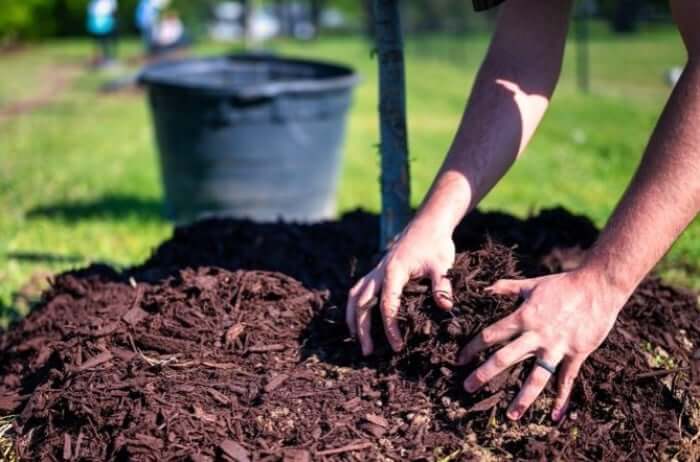
Most tree care mistakes come from good intentions. You mulch the tree, water it, prune it, stake it. You’re trying to help. And sometimes, without realizing it, you’re doing real damage. Worth saying upfront: some of this stuff is genuinely counterintuitive. Mulch volcanoes are probably the most widespread example of a practice that looks like care and functions like slow harm. But there are others, and a few of them get defended pretty aggressively by people who should know better.
The Mulch Volcano (Please, Stop Building These)
The mulch volcano has become so standard in this area that pointing it out sometimes makes people defensive. They paid a landscape crew to do it. Their HOA requires it. The house down the street has one. Doesn’t matter, it’s still wrong, and it’s doing real damage to the trees it’s supposed to be protecting.
Mulch against bark holds moisture in constant contact with tissue that wasn’t built for it. The bark softens. Fungi and bacteria move in. And then there’s the root flare problem; that widening at the base where the trunk transitions to roots. When it’s buried, the tree starts throwing out adventitious roots that grow into the mulch instead of the ground. They circle the trunk. They girdle it. The tree looks fine for years, sometimes a decade and then it starts declining and nobody can figure out why until someone digs down and finds a root wrapped around the base like a wire. By then the damage is usually permanent.
Pull the mulch back until you can see the root flare. Two to three inches deep in a wide ring, kept clear of the trunk. The University of Florida’s IFAS Extension has been making this point for decades. If your HOA fines you for it, that’s a conversation worth having with your board because right now plenty of HOAs are mandating a practice that kills trees on a 10-to-15-year delay.
Stakes That Overstay Their Welcome
Honestly, most newly planted trees in Central Florida don’t need stakes at all; the sandy soil actually lets roots establish pretty quickly. But on a genuinely exposed site or with a very top-heavy tree, staking makes sense short-term. The word is short-term. Six months. Maybe a year on a difficult site.
What actually happens is nobody takes them out. The tree gets planted, the stakes go in, and then life moves on. Two years later the ties are digging into the bark. You can sometimes see the indentations from the street and the trunk has never had to develop the taper and flex it needs to stand on its own. Stakes do the work the trunk should be doing. When they finally come out, the tree wobbles. Sometimes it falls over in the next rain.
If stakes have been on for more than a year, take them off. If the tree still can’t stand on its own, there’s an underlying problem; root establishment failure, wrong species for the site, something that a longer staking period isn’t going to fix. At that point it’s worth getting an actual assessment rather than just leaving the hardware on and hoping.
Lion-Tailing (It’s Not Pruning, It’s Vandalism)
Lion-tailing is when a crew strips every interior branch off a limb and leaves foliage only at the ends bare shaft, little tuft at the tip. It’s widespread in Central Florida, and the frustrating part is that the crews doing it usually present it as a service. Canopy thinning, wind reduction, storm prep. The terminology sounds right. The practice is the opposite of what those words mean.
Those interior branches distribute load along the full length of the limb. Remove them and all that force concentrates at the tip. The branch becomes a lever arm. Drive through any older Orlando neighborhood after a storm and you’ll see exactly which tres got lion-tailed; they're the ones with the broken ends hanging.
Actual crown thinning per the ANSI A300 pruning standards means removing branches selectively throughout the canopy, keeping the interior intact. If you can describe what lion-tailing looks like before a crew starts work and ask them specifically not to do it, that’s worth doing. Some will push back. That’s information.
Bad Cuts That Invite Bad Things
This one is more about whoever is doing the pruning than about homeowners specifically, but it’s worth understanding regardless.
A flush cut sliced tight against the trunk, removing the branch collar destroys the tree’s natural healing zone. Leave a stub instead and you’ve created a rot pathway straight into the wood. The correct cut lands just outside the branch collar, that slightly swollen ridge at the base of the branch. It’s where the tree’s sealing tissue is. Miss it on one branch and it’s not a big deal. Miss it on every branch over fifteen years of annual pruning and the cumulative damage is significant. This comes up a lot with homeowners doing their own work not because they’re careless, but because nobody ever showed them where exactly to cut.
In Central Florida’s heat and humidity, fungal pathogens don’t need much of an opening. A bad cut in June has had all summer to establish by the time you notice something’s wrong with the tree.
Drowning Your Trees in the Rainy Season
Orlando gets around 50 inches of rain a year, most of it between June and September afternoon thunderstorms most days, sometimes twice. Irrigation systems across the city keep running the same schedule regardless. There are smart controllers that adjust for rainfall and some homeowners use them, but the default is still set-it-and-forget-it, and for trees that means chronic overwatering during the wettest six months of the year.
Established trees don’t need supplemental irrigation during a Florida summer. Newly planted trees are a different story; they actually do need help getting established even in the rainy season, which is a separate issue. But for anything that’s been in the ground a few years, piling irrigation on top of daily rain saturates the root zone and creates conditions that Phytophthora and other water molds need. Root rot doesn’t always look like root rot at first it often shows up as general decline, yellowing, reduced growth and by the time the connection gets made to overwatering, the damage has been going on for a while.
Hiring the Wrong People
Central Florida has a lot of guys with a truck and a chainsaw willing to cut trees cheap, and some of them are genuinely skilled this isn’t about credentials for their own sake. It’s about the fact that the damage from a bad operator typically costs far more to deal with than whatever the original job saved. Topped trees, lion-tailed limbs, a branch through the pool cage. And separately: if someone without workers’ comp gets hurt on your property, your homeowner’s insurance is the one getting the call.
Verify insurance before anyone starts general liability and workers’ comp. Ask if they follow ISA pruning standards. Check local reviews, not just the Google stars but what people actually describe. None of this is foolproof. A crew can have all the right certifications and still make bad decisions on your property. But it filters out the worst outcomes, and in tree work the worst outcomes are genuinely bad.
Good Intentions Need Good Information
The mulch volcano is probably the easiest fix on this list. Pull it back this weekend, and the tree is better off immediately. The others take more effort; finding a crew that actually knows what they’re doing, adjusting irrigation schedules, checking stakes you may have forgotten about. Some of this stuff won’t show consequences for years either way, which is exactly what makes it easy to ignore. The trees in Orlando that fail in storms usually didn’t get that way overnight.
If you’re looking for tree care done the right way in the Orlando area, keep Tree Work Now in mind. Their expert crews have been serving Central Florida homeowners with safe, reliable tree care for years, known for a rigorous crew selection process and a commitment to treating your property like their own. Learn more at treeworknow.com.
 Please call