
 407-416-2704
 4.9-star rating on over 750 Google reviews
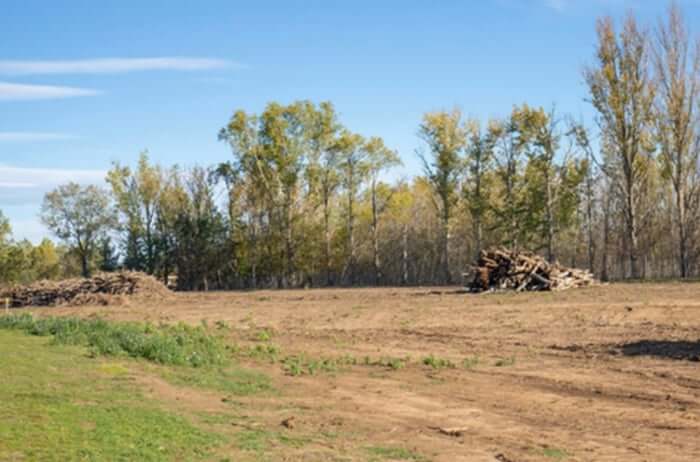
You closed on the wooded lot and you can already picture the house on it. The driveway comes in here, the garage sits there, and the only thing between you and a foundation is a stand of pines and scrub oak that a machine could flatten in an afternoon. So the instinct is to get the machine out there and start.
In Central Florida, that afternoon is where a lot of projects go sideways.
The instinct makes sense. It’s your dirt and they’re just trees, and land clearing looks like the simplest line on the whole build. But the ground under those trees is spoken by the city or the county tree rules, by the state, sometimes by the water management district, and every one of them wants to hear from you before the first trunk hits the dirt. Land clearing first and sorting it out later can end up being expensive in this part of the state. Almost everything hinges on what order you do things in.
Before a single tree comes down
Somebody has to map them all first. In the city of Orlando that means a certified arborist walking the lot and marking every regulated tree on it. Out in unincorporated Orange County, it’s a surveyor’s drawing, done inside the last two years, showing the property lines, each tree’s diameter and species, which ones rate as specimen or heritage, and where the wetlands and easements fall.
That drawing is the whole ballgame. The permit gets written against it, your mitigation bill gets set by it, and it tells you which trees you can take and which ones you’ll be designing the house around whether you like it or not. Skip it and you’re guessing, and guessing wrong on a protected tree is a fine, not a do-over.
One thing that trips people up is that the rules change at the property line. A lot inside Orlando city limits answers to one ordinance, the parcel next door in the county answers to another, and the Volusia cities up toward Daytona each keep their own. Same pine, different rulebook. Find out which one you’re standing in before you plan a thing.
The big oaks are where the money is
Not every tree on the survey counts the same. The small stuff comes out without much fuss. The big protected ones are another matter, though, and they’re what set the budget.
Orlando protects anything four inches and up on a site under development, and the bar climbs from there. A specimen tree, twelve inches and over in the city, or a live oak or magnolia twenty-four inches and over out in the county, carries weight. The grand and heritage trees, the giants, sit close to untouchable, and on the rare occasion you’re cleared to take one, you pay.
The paying happens in replacement inches. Pull a specimen in the county and you owe new trees adding up to three times the diameter you took out. A heritage tree runs five times. You can plant those inches or write a check into the county tree fund, and either way it clears before your permit does. A single grand live oak can land as a five-figure line all by itself, north of twenty thousand dollars by the time the mitigation is counted.
An opinion worth forming early: the healthy oak in the middle of the lot is usually cheaper to design around than to remove and replace. Keeping the mature trees can cut your permit fees, and a grown canopy is worth more on the finished property than a row of two-inch saplings will be for the next twenty years. Sometimes the floor plan wants to slide fifteen feet to save the oak. Let it slide.
The tortoise is what stops the job
If one thing on this list turns a two-week land clearing into a six-month headache, it’s the gopher tortoise.
Gopher tortoises are a state-listed threatened species, and they live exactly where you want to build, up on the dry sandy ground with the scrub oak and the pine. Their burrows are protected, and you cannot disturb a burrow, or the tortoise down in it, within twenty-five feet, until you’ve pulled a relocation permit from the state wildlife commission and had the animals moved.
You don’t get to move them yourself with a shovel on a Saturday, either. A certified agent runs the capture and the relocation, there’s a mitigation payment to the state, and lining all that up takes time.
The part that ends budgets, or careers if it’s bad enough, is doing it in the wrong order. Push the brush off first and go looking for the tortoises after, and now you’re into a disturbed-site permit and a wildlife officer who is in no rush to make your day easier. The state quit issuing the permits that let you just bury them a long time ago. That burrow you never surveyed for turns into the most expensive thing on the whole lot, and it was a hole in the ground you could have walked right past.
Don’t forget the wet corner
Half these lots have a low corner that stays soft for a day after it rains. If any of that is wetland, you’re dealing with yet another authority, usually the water management district, and wetlands don’t clear or fill on your say-so. The trees standing in a wetland won’t even turn up on your tree survey, which fools people into reading that corner as free. Far from it. That corner just answers to a different agency and a different permit.
The land clearing is the part everybody pictures
Once the paperwork is in hand, what’s left is the work people imagine when they say land clearing, and it runs in a rough order. Knock the vegetation down and haul it off. Then grub the site, which means pulling the stumps and the root mats out of the ground, because a stump left to rot is a soft spot under your slab later and a welcome mat for termites besides. Then grade.
Grading is where flat Florida fools you. The lot reads dead level, so it’s easy to assume water won’t be a problem, and then the first heavy summer storm sheets it straight at the fresh foundation. You’re shaping the ground to carry water away from the house and to lift the finished floor up over the flood elevation, which on most Central Florida lots means trucking in fill, not just spreading what’s already there. It’s the least exciting day on the site and the one most likely to save you a wet slab come August.
Give the timeline room
The thing to plan around is that the land clearing is not the slow part. A crew can clear and grub a normal lot in a matter of days. It’s the survey, the permit review, and above all the tortoise relocation that stretch the calendar, sometimes by months when the agent’s schedule and an open recipient site don’t line up.
So work backward from the far end. Survey while you’re still drawing the house. Get the tortoise question answered as early as you can, since it carries the longest tail. Permits after that. Clearing and grading dead last, once everything that needs a signature has one. Run it in that order and the land clearing is the quick, satisfying part it looks like from the road. Run it out of order and you meet every one of these agencies at once, on their terms, with a machine idling and a crew on the clock.
Before you push the first tree
If you would rather not learn all of this the hard way, Tree Work Now handles land clearing and lot clearing across Orlando and Central Florida, and they’ve been at it long enough to know which agency wants what, and in what order. Ask them for a land clearing estimate before you close on the lot, or right after, and you’ll know what it costs to open the ground up. You can find them at treeworknow.com.
 Please call