
 407-416-2704
 4.9-star rating on over 750 Google reviews
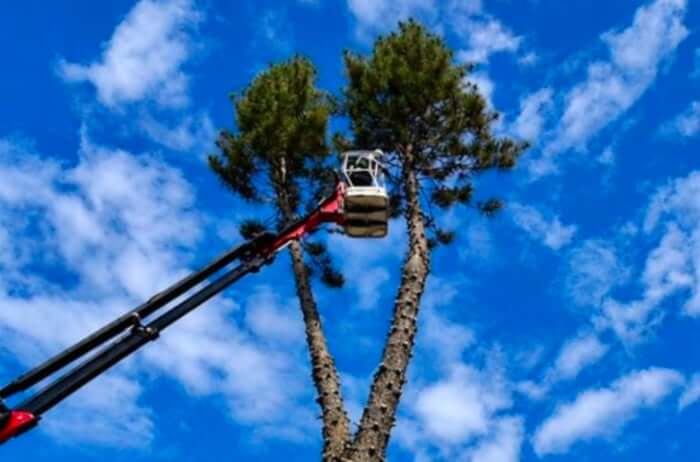
Check out your current trees in your yard. Really look. Like that laurel oak above the master bedroom. That water oak you have always kind of ignored that has the co-dominant forks. The Bradford pear that has already split twice. Now the calendar is not on your side and those trees are about to face their annual examination. June 1 is recognized as the official start of hurricane season, but storms do not read calendars. Central Florida homeowners actually have only about five to six weeks from early May to make their properties hurricane season-ready. For the last decade, tropical systems have more frequently begun forming in late May. And frankly, the vast majority are not calling a tree service until the cone of uncertainty has already been completely applied to their neighborhood. By then? All the good ones in Orange, Seminole and Volusia counties have been fully booked.
This is what your timeline should look like.
Week One (Early May): Walk Your Land With Honest Eyes
So the first thing you need to do before calling anyone for help is to take a leisurely stroll around your property or buildings with a clipboard in one hand (or if you’re like most of us, make notes on your phone). An arborist is not the endgame. Understanding how to communicate with one as you prepare for a consultation and learn of options is the real goal.
Start by looking up. Way up. Are there dead branches sitting in the upper canopy? That’s why they are called widow-makers, and they do not require hurricane season to come down. A strong July afternoon thunderstorm will do it. Observe any branch that has dropped its leaves while adjacent branches are full. That’s a dead limb, plain and simple.
Now look at the trunks. In particular, you want to watch for mushrooms that are either at or close to the base of the tree or grow directly along its trunk. Also known as conks, bracket fungi, or shelf fungi, they are all bad news. The International Society of Arboriculture specifies that fruiting bodies on a trunk nearly always mean a large amount of decay inside the trunk. That mushroom is merely the fruiting body of fungi that have been gnawing on wood for years.
Check for cracks. Real cracks, not just cracking like bark. Tip: Look for vertical splits in major limbs or where the trunk branches out. Cracks in the union of two co-dominant stems are especially worrisome, as that is precisely where trees will fail under wind load.
Finally, examine the ground. Does the soil heave up and down on one side of any tree? Do you see cracks in the earth that make a bow around the bottom? That movement is root plate movement and it indicates the tree is already starting to fail. Don’t wait on that one.
Week Two (Mid-May): Book Your Assessment
Call a certified arborist. Not a guy with a truck. Not your neighbor’s brother-in-law with a chainsaw. A professional arborist who is currently insured and has the ability to determine if trees are structurally sound, instead of just giving a price quote on removal.
Why the urgency in mid-May? Because it gets busy really quickly on the calendar. By late May the good tree services in Central Florida are booking their pre-hurricane work for three to six weeks out. By the time the National Hurricane Center begins naming storms, you will be competing with thousands of other homeowners for that same crew. And that desperation is what the unscrupulous operators feed on, the door-knockers, the storm chasers, the cash-only outfits. They are drawn to it.
In the time that you have, expect the arborist to address a few areas of work during this assessment. Removal of clearly hazardous trees. Crown thinning to reduce wind sail. Deadwooding to eliminate falling debris. Correction of weak attachments via structural pruning. End-weight reduction on overextended limbs. They give each tree its own prescription.
Week Three (Late May): Removal and Extensive Pruning
If trees have to come down, this is the time. Clearing results in large debris volume, heavy machinery access, and considerable mess. But by waiting until late May, your yard can recover, the stump can be ground out, and when or if you need to evacuate, there’s not a downed tree in your driveway.
Particular note should be taken with crown thinning. You do not want to butcher the tree. That is referred to as topping, and it is one of the worst things you can do to an adult tree. Good crown thinning involves removing 15 to 25 percent of the canopy by selectively cutting out crossing branches, deadwood, and any interior growth that is too dense. This creates a canopy that allows wind to pass through instead of catching it like a sail.
Think of it this way. A well-developed dense canopy is simply a giant umbrella that intercepts every changing wind direction. Wind does not pass through it. Wind hits against it, and that force is transmitted right to the root plate. Manage the canopy well, and that same wind flows through with a fraction of the leverage on the tree’s anchor system.
Fourth Week (Last Week of May): Focus on Young Trees and Yard Debris
And now you focus on the little things. Inspecting young trees, any tree that has been planted within the last three years, for proper staking. Stakes that were suitable at planting often become an issue as the tree develops. Wires can girdle trunks. In Florida’s sun, even the stakes can become a threat if they fall out of the ground or the ties have fallen apart.
However, most trees that have been planted in the ground for two or more growing seasons should be able to remain erect on their own. If yours can’t, well that’s a sign that the staking has thwarted proper trunk taper build-up. But a hurricane is coming in days and just removing that support isn’t what you want to do. Re-secure instead. Replace failing ties. Reset stakes if needed.
And while you are at it, clean the yard. All the loose patio furniture, decorative rocks, garden tools, kids’ toys, they all become missiles in 80 mph winds. It is the hurricane that knocks a tree over and also picks up your grill and throws it through your neighbor’s window. Both problems matter.
Week 5 (Early June): Record Everything
After the work is done and after you clean the yard, another important thing remains to do. Take pictures of every tree on your property and film it. For each tree, walk a circle around it, take shots from at least two directions (so you can compare), get the full top of the canopy if possible, and definitely narrate what you see.
Why? If a storm damages a tree, then well-documented pre-storm condition means that if you have to make an insurance claim, it will be a much smoother process. Adjusters need to be aware of what was in place prior. Without pictures, they are basically taking your word for it. Hardly a great position to negotiate from when you’re contending with an entire house of destruction.
Archive the documentation to a location that can be accessed remotely. Cloud storage, email to self, send a duplicate to a family member outside the storm area. If your house was destroyed and you have evacuated, you don’t want the only place your tree records still exist to be a hard drive that is now bobbing around in the floods in your living room.
The Most Common Mistakes Homeowners Make When Preparing Trees for Hurricane Seasons
The biggest mistake? Believing that wind damage is unpredictable. It’s not. Certified arborists can identify with reasonable certainty which trees are going to fail in wind. Co-dominant stems with included bark. Trees with significant root rot. Heavily lopsided canopies. Trees in saturated sandy soil after weeks of summer rain.
These aren’t random failures. These are foreseen failures that just await the appropriate wind event.
Another mistake. Looking at healthy-looking trees and assuming they are safe trees. Many of the most catastrophic failures in Central Florida hurricane seasons have involved trees that appeared sound when viewed from ground level. A full canopy, no gaping wounds, no decay. But the root system was already compromised, or inner cavitation had occurred, or that species of tree just can’t handle the wind loads Florida uses like a punching bag.
To tell the truth, laurel oaks have been made a poster child for this problem. Beautiful trees with high green canopies that fail monumentally because the wood is simply not strong enough to withstand the force of a mature canopy in even moderate gale-force winds. If your home is near large laurel oaks, you ought to speak with a professional about that, sooner rather than later.
The Cost of Waiting
Pre-storm work is a fraction of the cost of post-storm work. By a lot. Demand for debris removal following a major hurricane hits an all-time high, crews work around the clock, equipment is in short supply, and prices reflect all of it. Factor in the possibility of property damage, insurance deductibles, and temporary housing if your home becomes unlivable, and the math turns ugly quickly.
The actual work could cost a few hundred to a few thousand dollars or more, depending on what’s recommended for an average Central Florida property with mature trees. The price of a tree on your roof? Add in structural repairs, water damage remediation, mold removal, and loss of income, and you are easily in the tens of thousands now.
Hurricane prep tree service isn’t about being one of those paranoid people. It’s about being realistic. You have to remind yourself that you live in a state whose tropics get plowed over with depressing regularity. Your trees are aging. Others don’t belong there at all. Others just need attention. May seems more manageable than October for all of it.
Start the walk today. Make the call this week. The calendar is shorter than you think.
If you need an Orlando area tree service for yourself or a neighbor, remember Tree Work Now. Their knowledgeable crews have been providing Central Florida homeowners with safe, dependable tree care service for years. Their crew selection process is very strict, and they’re known for treating your property as if it was their own. They come with real know-how at every job. Learn more at treeworknow.com.
 Please call